5 Star Service
Tree roots in drain pipes are one of the most destructive plumbing problems a homeowner can face. Roots enter underground pipes through joint gaps and hairline cracks, then branch out rapidly until they cause full blockages, pipe fractures, and sewage overflow, often with no warning until the damage is severe.
At BDP Plumbing, we’ve spent over 10 years diagnosing and repairing root-damaged drains across Maitland and the Hunter Valley. This guide covers the warning signs, how roots infiltrate pipes, why local homes face a higher-than-average risk, and what a licensed plumber does to fix the problem permanently.
What Are the Warning Signs of Tree Roots in Your Drain Pipes?
The earliest signs of root intrusion are easy to dismiss. A slow drain, a gurgling toilet. But catching root damage before a full blockage develops is always cheaper than an emergency repair after sewage backs up. Here is what to watch for:
- Slow-draining fixtures across multiple rooms: When more than one sink, shower, or toilet drains slowly at the same time, the blockage is in the main sewer line, not in an individual fixture. Root intrusion restricts flow progressively, so the slowdown tends to worsen over weeks.
- Gurgling sounds from drains: Gurgling after flushing or running the sink signals air being pushed back through a partial blockage. In older Tenambit and East Maitland homes with clay sewer pipes, this is often the first audible sign of root infiltration.
- Sewage smell near drains or in the yard: A persistent rotten-egg smell near drain cleanout points to a cracked pipe allowing effluent to escape into the surrounding soil. Cracks and root entry points go together in ageing pipe systems.
- Unusually lush or sunken patches in the lawn: Escaping effluent fertilises the soil above a damaged sewer line, creating strips of greener-than-normal grass. Soft or sunken ground along the pipe path points to a section that has partially collapsed.
- Recurring blockages in the same drain: If the same drain blocks repeatedly despite clearing, roots have taken hold inside the pipe. Tree roots blocking drains in Maitland is one of the most common repeat callouts we attend in Rutherford and Cessnock. Each clearing removes the mass temporarily, but roots regrow through the same entry point until the pipe is sealed or relined.
- Sewage backing up into the lowest fixture: When the sewer backs up, the lowest fixture in the house, usually a ground-floor toilet or shower, overflows first. This is a plumbing emergency. Turn off the water at the mains and call a licensed plumber immediately.
How Do Tree Roots Get Into Drain Pipes?
Tree roots grow toward water. Even moisture vapour escaping from a hairline crack is enough to draw them in. Once inside, conditions are ideal, warm, moist, nutrient-rich, and roots branch rapidly until the pipe bore is blocked. Three factors explain why this happens so often in Maitland:
Clay Pipes and Why They Fail First
Clay and terracotta pipes were standard in Maitland homes built before 1980. Properties throughout Rutherford, Metford, and Cessnock were built on these pipes, jointed at regular intervals.
Each joint is a potential root entry point, and those joints have been in the ground for between 40 and 70 years. Modern PVC pipes have tighter seals, but homes on reactive clay soils around Maitland CBD and Bolwarra Heights face seasonal ground movement that stresses any buried pipe over time.
How Fast Roots Spread
A hairline intrusion can become a partial blockage within six to twelve months, and a full blockage within one to two years. Fig and willow roots are the fastest-growing offenders. In Tenambit and Metford homes with older clay pipes and mature garden trees, that timeline is often shorter than homeowners expect.
Which Trees Cause the Most Drain Damage in Maitland?
Not all trees carry equal risk. The worst offenders have aggressive, moisture-seeking root systems that spread well beyond the canopy. In Maitland and the Hunter Valley, these species generate the most root-related drain callouts:
| Tree Species | Root Behaviour | High-Risk Suburbs |
| Camphor Laurel | Fast-spreading, wide lateral roots | Bolwarra Heights, East Maitland |
| Fig (Ficus species) | Highly aggressive, wide surface and deep spread | Maitland CBD, East Maitland |
| Liquidambar | Deep taproot with extensive laterals | Thornton, Aberglasslyn |
| Willow | Extremely aggressive moisture-seeking roots | Near any watercourse |
| Jacaranda | Moderate risk, wide lateral spread | Rutherford, Metford, Tenambit |
| Lilly Pilly | Moderate risk, common in newer landscaping | Lochinvar, Cessnock |
If any of these species grow within 10 metres of your sewer line, a drain inspection near me is well worth booking with a drain plumber in Maitland before a problem develops.
Why Maitland and the Hunter Valley Are High-Risk Areas
In over 10 years of drain work across this region, I’ve seen the same local factors come up again and again. Three conditions make root damage more common here than in newer suburban developments elsewhere in NSW:
Ageing Sewer Infrastructure
A significant portion of housing in Rutherford, Metford, East Maitland, Tenambit, and Cessnock was built between the 1950s and early 1980s (Australian Bureau of Statistics, Census of Population and Housing).
The sewer lines laid during that period were predominantly clay or terracotta, and many have been in the ground for 40 to 70 years. Tree roots in sewer pipes across the Hunter Valley are a recurring issue where clay infrastructure and dense tree cover meet, and a blocked sewer in Rutherford is one of our most frequent callouts.
Reactive Clay Soils and Ground Movement
Lower-lying areas around Maitland CBD and along the Paterson Road corridor are predominantly clay-based. Clay soils shrink in dry weather and swell after rain, creating seasonal ground movement that stresses buried pipes year after year. For a pipe already showing its age, that movement often turns a hairline crack into an open joint and an open joint into a root entry point.
Your Sewer Boundary Responsibility
Under Hunter Water’s standard service arrangements, the property owner is responsible for the drain from their home to the connection with the Hunter Water main. Hunter Water’s sewer blockage guidance confirms that blockages within the property boundary are the homeowner’s responsibility. Knowing where your sewer line runs and which trees sit above it is genuinely useful information for any Maitland homeowner.
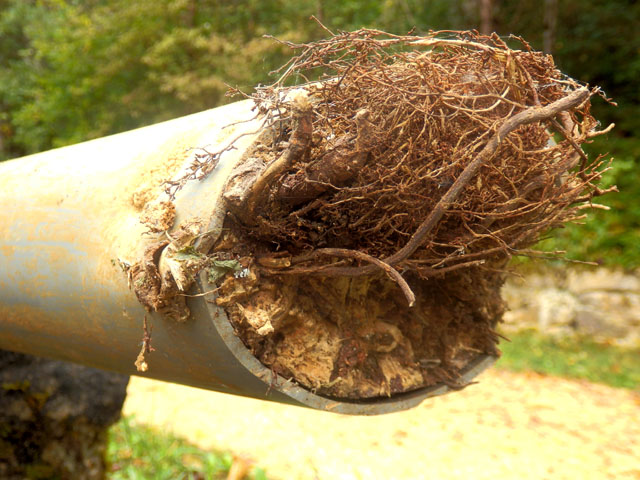
Can Tree Roots Damage Stormwater Drains Too?
Yes. Stormwater drains carry rainwater runoff from roofs, driveways, and paved surfaces, not sewage, but they run underground through the same jointed pipe systems and attract roots in exactly the same way.
The key difference is ownership. Hunter Water maintains the sewer network beyond your boundary. Maitland City Council maintains stormwater drains in public land. The stormwater pipes on your private property are your responsibility.
In newer estates like Thornton and Aberglasslyn, young street trees planted during early development are now reaching the age where root systems start extending toward underground pipes, a pattern that has already begun showing up in stormwater callouts across those areas.
If surface water is pooling on your property after rain, a licensed plumber can inspect and clear private stormwater lines. If the blockage is in a Council drain, contact Maitland City Council directly. Not sure where the blockage sits? A CCTV inspection will tell you.
What Happens If You Ignore Tree Roots in Your Pipes?
Ignoring tree root intrusion does not make it cheaper to fix later. It makes it significantly more expensive. Root problems follow a predictable escalation pattern, and each stage costs more to repair than the last:
- Stage 1. Hairline intrusion, slow drain: Roots have just entered the pipe through a small crack or joint gap. Flow is barely affected. Many homeowners dismiss this as a minor nuisance. A hydro jet at this stage resolves it quickly and cheaply.
- Stage 2. Root mass forming, regular blockages: Roots have branched inside the pipe, progressively restricting flow. The same drain keeps blocking. A hydro jet still clears it, but the entry point needs sealing, or roots will return within months.
- Stage 3. Pipe fracture, structural damage: Root pressure has split the pipe wall or widened a joint into a crack. Effluent is now escaping into the surrounding soil. A wet patch in the lawn or a sewage smell in the yard are common signs at this stage. Pipe relining is usually still possible here, but the cost is higher than Stage 1 or 2.
- Stage 4. Pipe collapse, sewage backup: The pipe wall has failed. Sewage backs up through the lowest fixture in the house. Excavation and full pipe replacement are now required. In older Maitland suburbs like Rutherford, Metford, or Cessnock, where the pipes are already 50 to 70 years old, a collapse can also destabilise surrounding soil, leading to ground subsidence and potential damage to driveways, gardens, or structures above.
The cost difference is stark. A hydro jet job caught at Stage 1 typically runs to a few hundred dollars. A full pipe excavation and replacement at Stage 4 can reach $10,000 to $15,000 or more, depending on depth, access, and the length of pipe affected. Early detection is not just good practice. It is the cheapest decision you can make.
How Plumbers Diagnose Tree Root Problems
Root intrusion symptoms overlap with grease buildup, scale, and foreign object blockages. You can’t tell the difference without a camera. Here’s how a licensed plumber confirms the diagnosis:
CCTV Drain Camera
A waterproof camera is fed through the drain to inspect the pipe in real time. It confirms whether roots are present, how severe the intrusion is, the structural condition of the pipe wall, and the exact location of any cracks or joint failures.
No digging, no guesswork, no unnecessary work. For homeowners in Rutherford or Tenambit with older clay pipe systems, a CCTV drain inspection in Maitland is often the smartest first step before any repair decision is made.
Reading the Results
The footage tells us exactly what we are dealing with. Hairline root entry with minimal mass means a hydro jet and relining can resolve it in a single visit. A dense root mass or a fractured pipe wall changes the repair approach entirely, and pinpoints the exact location so any excavation targets only the affected section.
Licensed Plumbers Only
All drain inspection, repair, and pipe relining work in NSW must be carried out by a licensed plumber and drainer. Under NSW Fair Trading regulations, unlicensed plumbing work is illegal and can void your home insurance for any related damage. Always ask for a licence number before any work begins.
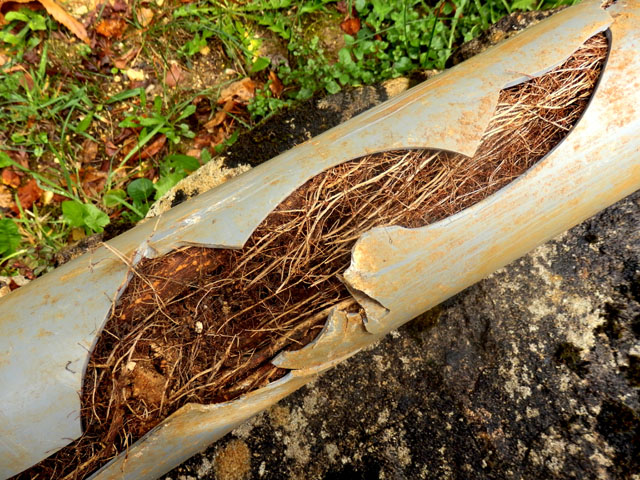
How to Get Rid of Tree Roots in Drain Pipes
The right removal method depends on what the CCTV inspection finds. There is no single fix that suits every situation, and any plumber who quotes a repair without inspecting first is guessing. Here is how each method works and when it applies:
Hydro Jetting
High-pressure water jetting blasts the root mass out of the pipe, clearing the bore and restoring flow immediately. Hydro jetting in Maitland is the most effective method for removing established root intrusions without excavation. It clears the pipe thoroughly but does not seal the entry point, so a permanent repair always follows.
Pipe Relining
Where the pipe is cracked or has open joints but remains structurally intact, pipe relining is the permanent fix. A flexible epoxy resin liner is inserted and cured in place, creating a smooth, jointless pipe inside the original. Roots cannot penetrate a relined pipe.
No excavation is required, and most relining products carry manufacturer warranties of up to 50 years (per product specifications; confirm with your plumber at the time of quotation). Pipe relining in Maitland is typically completed in a single visit with no damage to your yard or driveway.
Paula Beavan found out first-hand how quickly root-blocked pipes can bring a household to a standstill. She wrote: “Blake saved us from overflowing toilets when our pipes were blocked with tree roots. He turned up when he said he would and fixed the problem with no fuss. I’d 100% recommend BDP Plumbing to anyone.” Read Paula’s review here.
When Pipes Must Be Replaced
Where root damage has caused a pipe section to collapse, excavation and full replacement are required. This is more disruptive and more expensive, which is exactly why early detection matters. A pipe caught at the crack stage costs a fraction of what a collapsed pipe costs to restore.
What About Chemical Treatments?
Products like copper sulphate slow regrowth temporarily, but don’t remove the root mass already inside, and roots return through the same crack within months. They also risk accelerating joint deterioration in older clay pipes. Chemical treatments are not a substitute for professional inspection and repair.
How to Prevent Tree Roots from Damaging Your Drains
Prevention is significantly cheaper than repair. If you’re in an older Maitland suburb with established trees and clay pipes, these steps will reduce your risk considerably:
- Know where your sewer line runs: Contact Maitland City Council or Hunter Water to request a drainage diagram for your property. Knowing the pipe path helps identify which trees sit directly above it.
- Maintain safe planting distances: Follow Maitland City Council’s recommended clearance distances when planting new trees near sewer lines. Large canopy species require significantly more clearance than small ornamental trees.
- Book a CCTV inspection every 3 to 5 years: For older homes in Rutherford, Metford, or Tenambit with clay pipes and established trees, periodic camera inspections catch root intrusion before it develops into a problem requiring tree root removal in Maitland that needs emergency attention.
- Don’t rely on chemical root killers long-term: Products like copper sulphate slow root regrowth temporarily but don’t repair the entry point. Roots return through the same crack or joint.
- Act on slow drains early: A slow drain is the earliest warning. Addressing it before a full blockage develops is always cheaper than an emergency plumber callout in Maitland.
- Consider proactive pipe relining: If you have an older clay pipe system with established trees overhead, relining before a problem develops eliminates the risk of future root intrusion entirely.
If you’re buying a property in Maitland, always request a separate drain camera inspection. I’ve seen new owners face significant tree root drain repair costs in Cessnock and across the Hunter Valley within months of settlement because root damage wasn’t picked up before purchase.
Under NSW Fair Trading regulations, all drain repair and pipe relining work must be carried out by a licensed plumber and drainer. Always verify your plumber’s licence before authorising any work.
Areas We Service
BDP Plumbing services Maitland and surrounding areas, including Rutherford, Metford, East Maitland, Thornton, Cessnock, Bolwarra Heights, Tenambit, Lochinvar, Aberglasslyn, and across the Hunter Valley region.
Tree Roots Blocking Your Drains? Call BDP Plumbing Today
Root damage doesn’t improve on its own. Every flush makes the blockage worse, and every delay increases the risk of sewage backup, pipe collapse, and a larger repair bill.
BDP Plumbing is Maitland’s trusted licensed and insured drain specialist. Same-day service, fixed-price quotes, and zero guesswork.
- $0 callout fee
- Same-day service available
- 24/7 emergency response
- Fixed-price quotes before any work begins
- Lifetime labour warranty on all drain repairs and pipe relining
- Master Plumbers member
Call 0404 141 031 for a same-day diagnosis. Don’t wait for a sewage overflow to act.
Frequently Asked Questions
How do I know if tree roots are in my drain pipes?
Watch for slow-draining fixtures across multiple rooms, gurgling sounds after flushing, recurring blockages in the same drain, and sewage smells near outdoor cleanouts. Two or more of these together is a strong indicator of root intrusion. A CCTV drain inspection is the only way to confirm it definitively.
How do plumbers remove tree roots from drain pipes?
The standard approach is hydro jetting to blast the root mass out of the pipe, followed by pipe relining to seal the entry point and prevent regrowth. If the pipe wall has collapsed, excavation and replacement are required. The right method is always confirmed by CCTV inspection first.
How fast do tree roots grow inside a drain pipe?
A hairline intrusion can develop into a partial blockage within six to twelve months and a full blockage within one to two years. Aggressive species like fig and willow grow faster, especially in older Tenambit and Metford homes where mature root systems are already close to the pipe.
Can I dissolve tree roots in drain pipes myself?
Chemical treatments like copper sulphate slow regrowth temporarily, but don’t remove the root mass already inside, and roots return through the same entry point within months. They also don’t repair the structural damage that allowed roots in. A licensed plumber with a hydro jet and pipe relining equipment is the only lasting solution.
Are stormwater drains at risk from tree roots, too?
Yes, stormwater drains on private property are just as vulnerable as sewer drains, and the repair is the property owner’s responsibility. Council maintains its own stormwater infrastructure on public land. If surface water is pooling on your property after rain near established trees, a stormwater drain inspection is worth booking.
How much does tree root drain repair cost in Maitland?
Cost depends on the severity of the intrusion and the pipe condition. A hydro jet callout is typically a single-visit job, while pipe relining costs more but is far cheaper than full excavation and replacement. BDP Plumbing provides fixed-price quotes before any work begins. Call 0404 141 031 for a same-day assessment.